





Esta publicación también está disponible en:
If you spend enough time in Puerto Vallarta, especially over the summer, you have probably heard some version of it:
“Tourism is down.”
“There aren’t as many people here.”
“Vacation rentals aren’t booking like they used to.”
But is that actually true? While airport numbers are down, what do the Short Term Vacation Rental numbers say. Not focusing on the recent past, but what about the future? What does it say?
The answer is a little more complicated, and considerably more interesting.
Recent booking and occupancy data from PVRPV Vacation Rentals shows that Puerto Vallarta’s vacation rental market is changing. Guests are travelling differently, staying longer, and becoming increasingly focused on the winter months. They are booking 2-3 years in advance for extended stay bookings of 3-6 months and month long vacations at least a year or two in ahead of time.
And sometimes, simply counting the number of reservations doesn’t tell the whole story.
First, Let’s Talk About Summer
There is no question that summer has softened. This is the tough time, always was until the pandemic. When we see the drops in bookings it hurts all businesses that time of the year. But something to consider is that the number of rental units are up over 80% in the last ten years. More selection that is more spread out over a larger region, makes the impact per neighbor hood drastic.
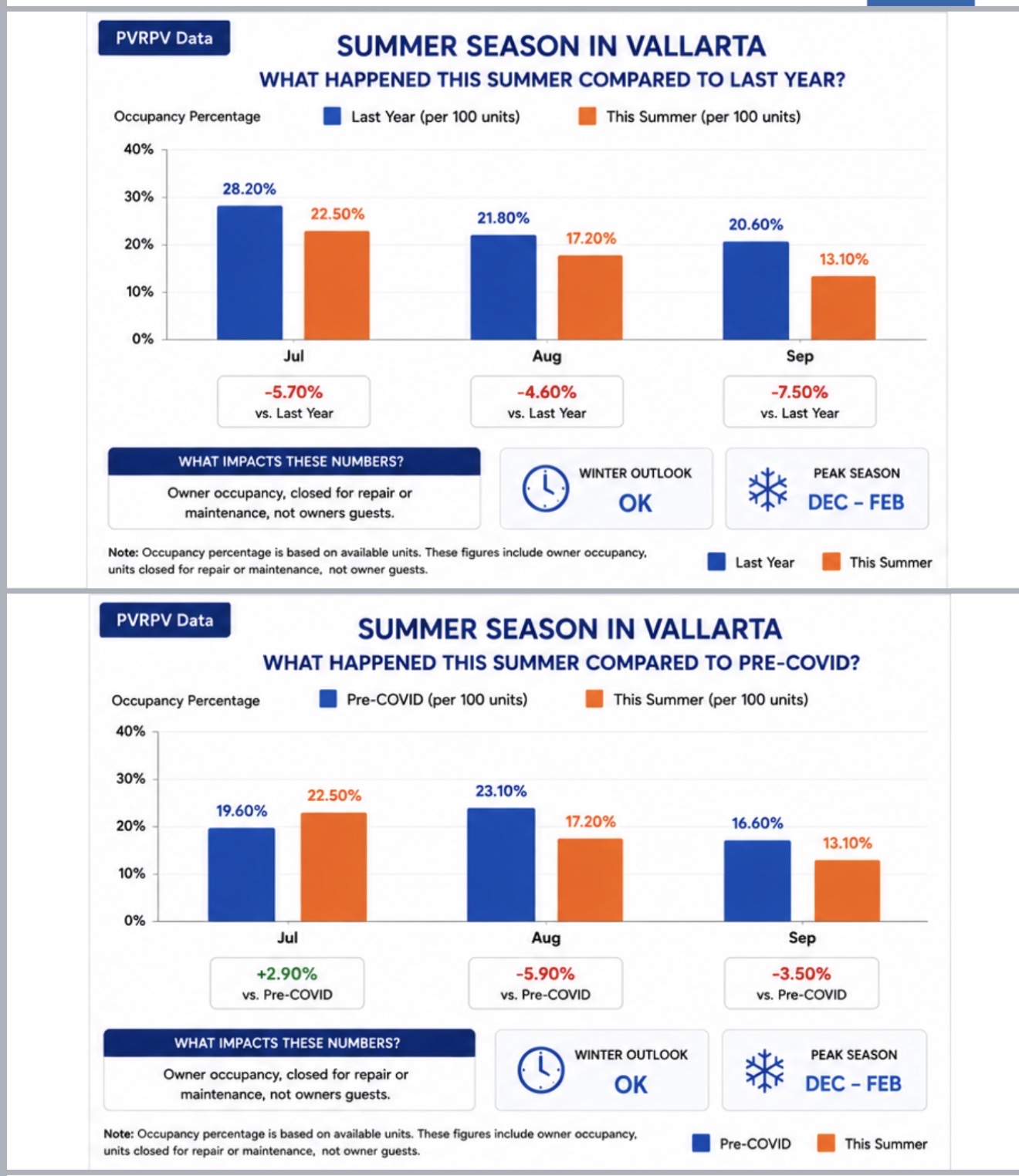
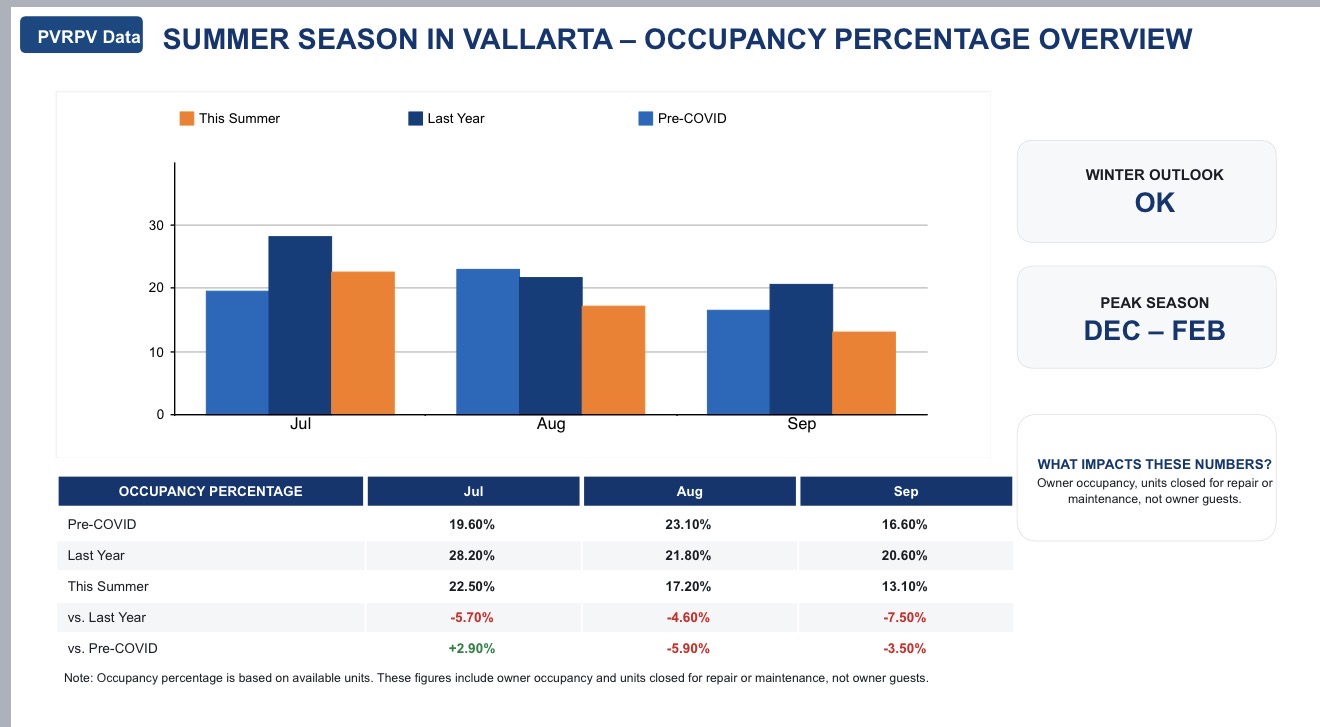
PVRPV’s occupancy data shows July 2026 at 22.5%, compared with 28.2% last year. August dropped from 21.8% to 17.2%, while September declined from 20.6% to 13.1%. But September is not here yet, and this is an estimate number based on current booked reservations. Last minute renovations are yet to be counted in the final number.
At first glance, those numbers may sound alarming.
But historical perspective matters.
Pre-PANDEMIC, summer occupancy wasn’t dramatically different. July occupancy, for example, was just 19.6%. This summer’s 22.5% is actually 2.9 percentage points higher. August and September, however, are currently running below their pre-PANDEMIC comparisons.
In other words, last summer may not necessarily be the benchmark against which every future summer should be measured.
There is another important consideration: occupancy statistics can also be affected by properties being unavailable because owners are using them or because units have been temporarily closed for repairs or maintenance.
So yes, summer is slower.
But summer in Puerto Vallarta has always been the quieter part of the vacation rental calendar.
The Bigger Story Is How Long People Are Staying
This is where the numbers become particularly interesting.
Guests may not always be booking as frequently, but when they come to Puerto Vallarta, they are staying longer. Across every month measured from October through March, PVRPV’s current average length of stay is higher than it was pre-PANDEMIC .
In October, the average stay has grown from 7.6 nights to 10.8 nights.
December has increased from 11.7 to 13.5 nights.
February jumped from 12.7 to 17.5 nights.
And January?
The average stay has climbed from 20.7 nights pre-PANDEMIC to an impressive 26.5 nights today.
That represents a fundamental shift in how some visitors are experiencing Puerto Vallarta. They’re not simply arriving for a quick week in the sun. Statistics show for the most part, they’re settling in.
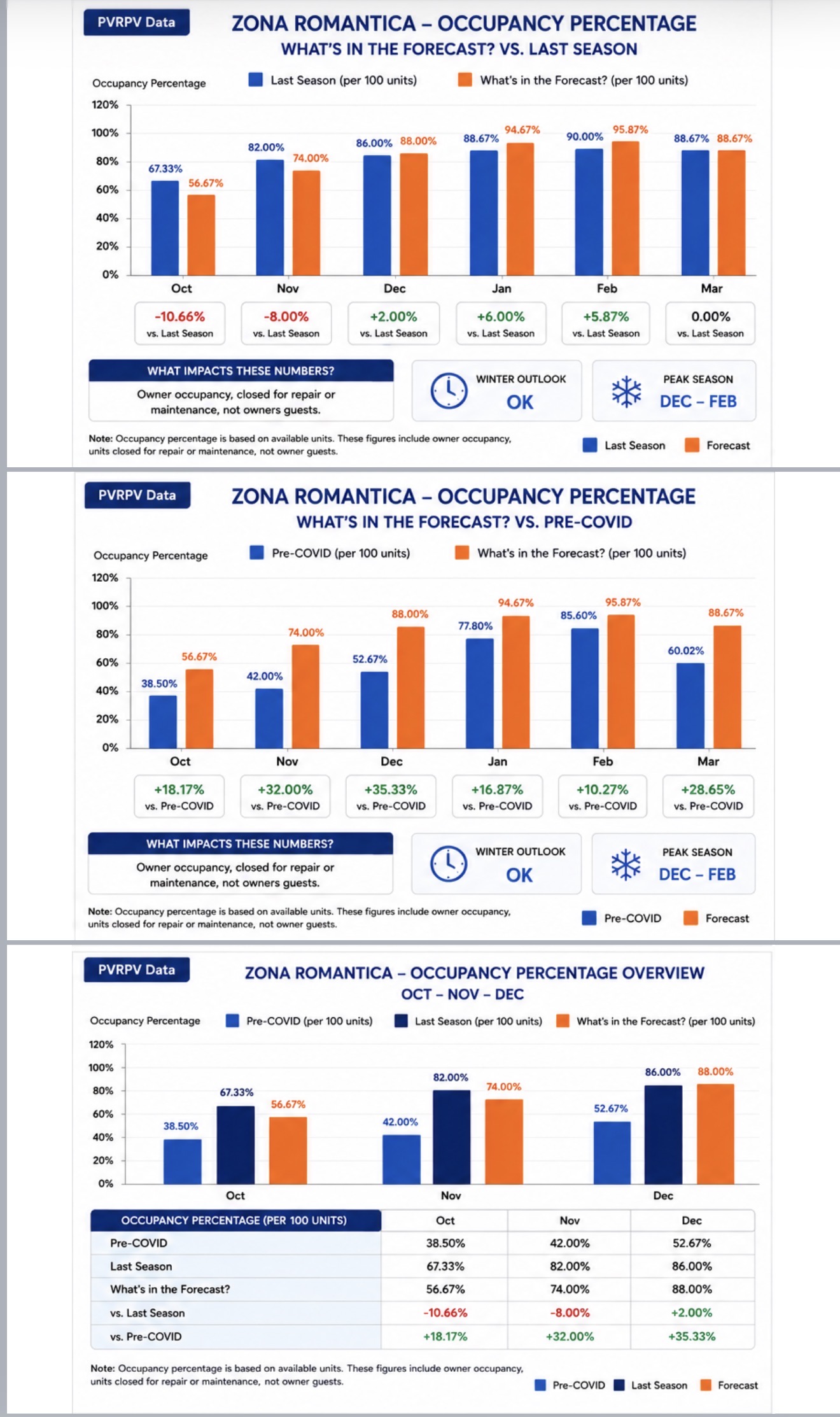
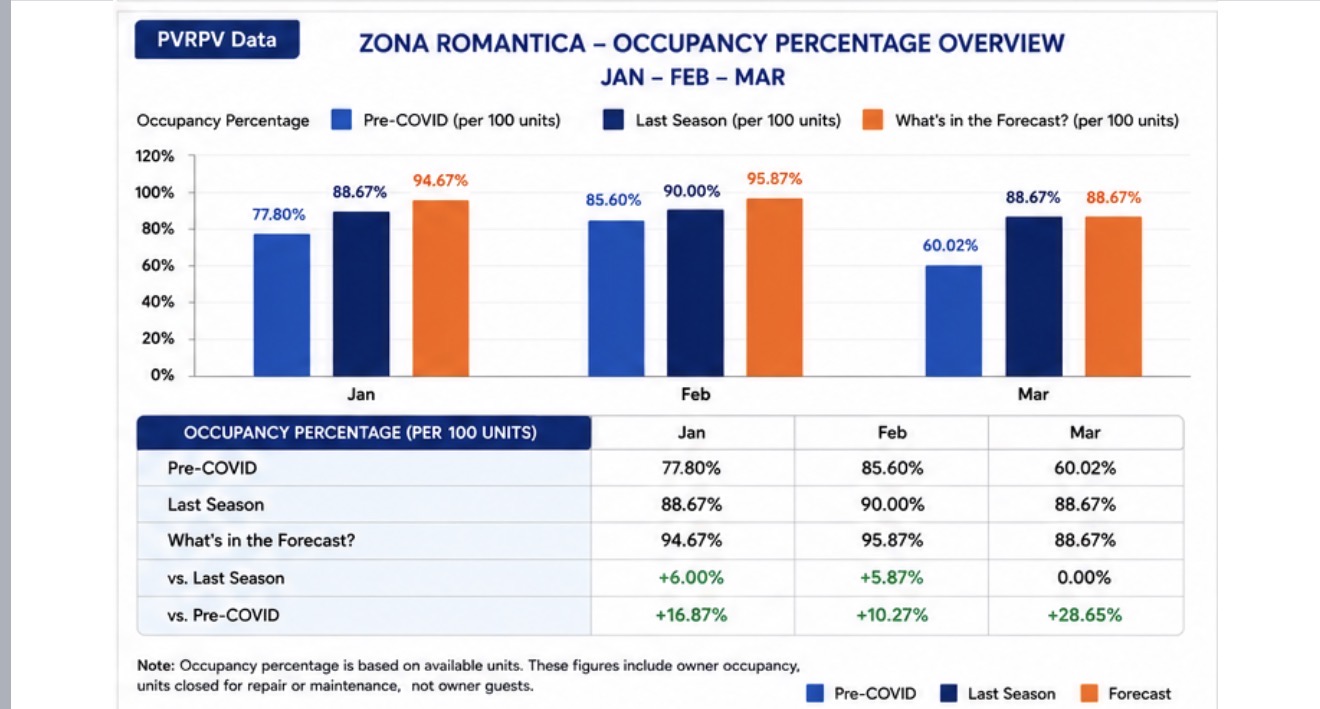
Last-minute bookings remain an important part of the equation. Over the past several years, approximately 16%–27% of total bookings have come from last-minute reservations.
These additional bookings are, of course, subject to remaining availability — the more inventory already booked, the less opportunity there is for last-minute growth.
Confirmed reservations are also subject to cancellation. However, historically, our October through March cancellation rate has remained below 5% of total bookings for the season.
The takeaway: The charts represent business already secured today, with additional upside still possible from last-minute demand, while historical cancellation levels during our primary season remain relatively low.
Fewer Reservations Doesn’t Necessarily Mean Fewer Rental Nights
This is an important distinction for property owners and anyone watching Puerto Vallarta’s tourism industry.Imagine ten reservations averaging seven nights each. That’s 70 occupied nights. Now imagine only eight reservations, but those guests stay an average of ten nights. That’s 80 occupied nights.
The reservation count went down, while the number of rental nights went up. It’s why looking at one statistic in isolation can create a misleading picture of the rental market. Length of stay, occupancy, rental value and seasonality all need to be considered together.
Puerto Vallarta Isn’t Disappearing — The Market Is Evolving
Perhaps the most significant change is the growing difference between seasons.
Summer and shoulder months are becoming increasingly price-sensitive and competitive, while Puerto Vallarta’s traditional winter season continues to be the city’s powerhouse.
That creates challenges.
Property owners may need to become more realistic about summer pricing. Rental companies will need stronger marketing during slower months. And the industry may need to work collectively to give travellers more reasons to visit Puerto Vallarta outside the traditional high season.
But there is another side to the story.
Visitors are still choosing Puerto Vallarta, and many are choosing to stay considerably longer than they once did. PVRPV’s own analysis of the data reaches much the same conclusion: average stays have increased since PANDEMIC, suggesting guests are taking longer vacations and placing greater value on their time away.
Without a doubt with the dip in shoulder season and summer season, is impacting the over annual numbers.
So perhaps the question isn’t:
“Are there fewer tourists?”
The better question might be:
“How is the way people vacation in Puerto Vallarta changing?”
Because the numbers suggest that change is already well underway.
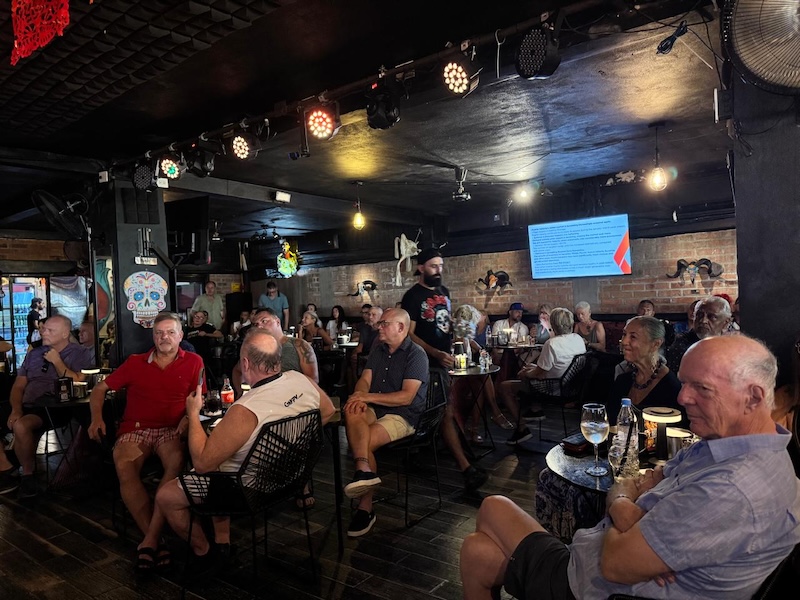
Editor’s Note: Jamie Alexander presented this data at La Catrina Cantina during a meeting titled “What’s Next? Economy & Tourism: Outlook for Puerto Vallarta”.
Esta publicación también está disponible en: