




Esta publicación también está disponible en:
Stories of resilience, identity and impact in Puerto Vallarta’s LGBTQ+community
By Jamie Alexander and Christian Velasco
Out & About PV continues our ongoing celebration of women who lead, create, and care for our LGBTQ+ community in deeply personal and powerful ways. From the soulful voice and ancestral journey of performer Kim Archer to the decades-long activism and community-building work of Adriana Batista, these stories reflect lives shaped by identity, and purpose.
Kim Archer: A Voice Guided by Heart and Heritage
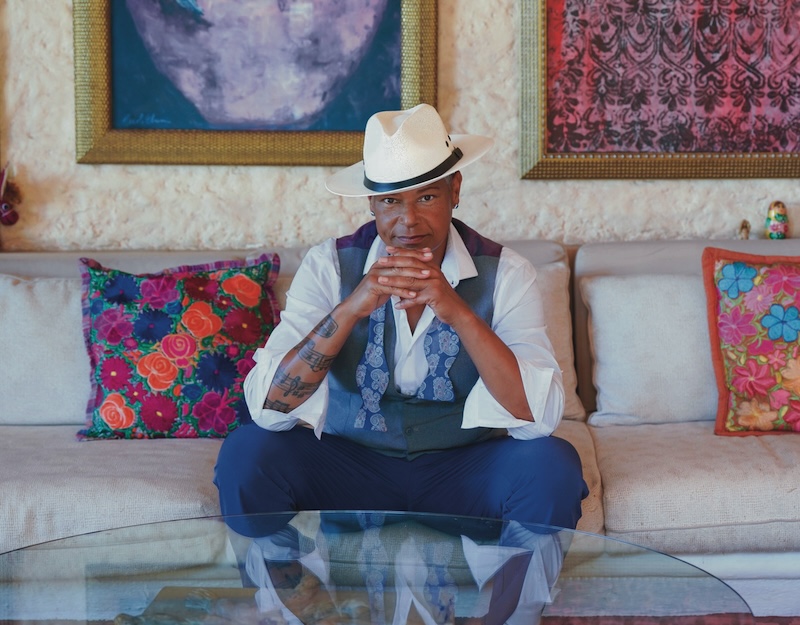
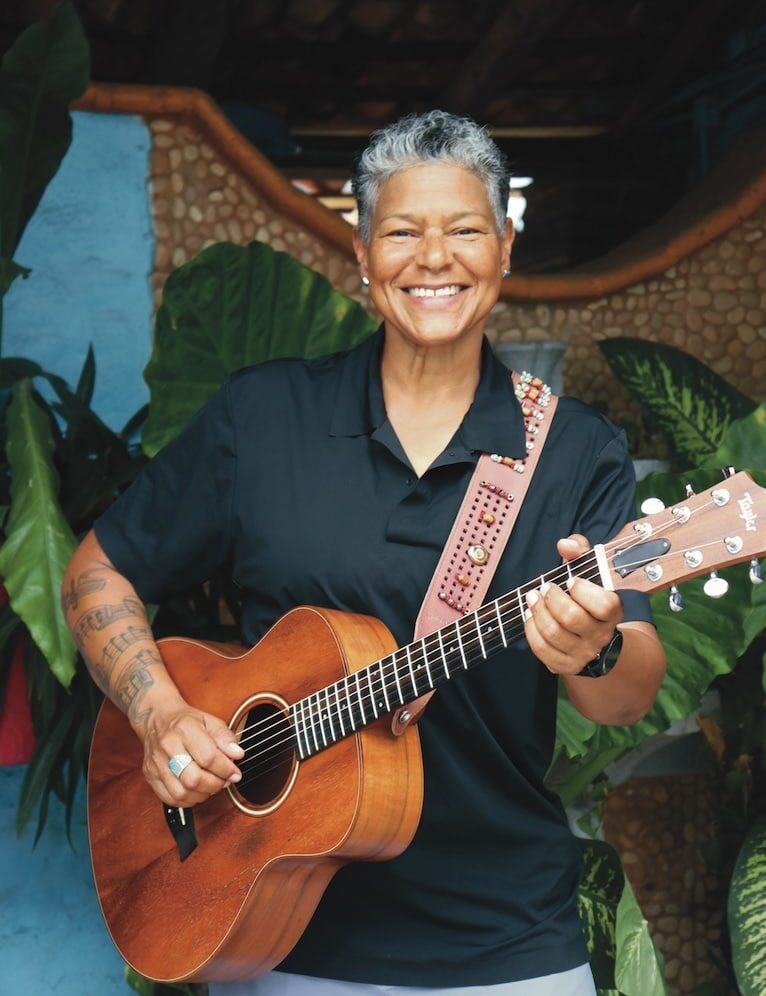
There’s something unmistakably magnetic about Kim Archer—on stage, in conversation, and in the way she tells her story. It’s a story rooted in music, shaped by resilience, and ultimately guided by a sense of belonging that, perhaps, was always written in her DNA.
Born in Terre Haute, Indiana, in 1972, Kim’s early life was grounded in a kind of simplicity that feels almost nostalgic now.
“It was the time when you could rent a house on one income,” she recalls, describing a childhood where her mom stayed home, her dad played rhythm guitar, and music filled the spaces in between. That guitar—gifted to her at just four years old—would quietly set the course for everything that followed.
Life in the country meant days spent outdoors, surrounded by animals, woods, and imagination. But inside the house, music was the heartbeat. Saturday mornings weren’t just for chores—they were for dancing in the kitchen, singing along, and falling in love with sound.
“According to my mother, I was tapping my foot on time before I was walking,” Kim says—and it shows. Music wasn’t something she discovered; it was something she always knew.
That connection only deepened later in life in a way few could predict. At 51, Kim found both of her biological parents, uncovering a powerful truth: music truly runs in her blood. Her biological father is Ernest Evans—known to the world as Chubby Checker. Suddenly, what had always felt instinctive made even more sense.
“So yes,” she says with a smile, “the DNA probably played a part in that.”
Long before that revelation, Kim was already building her musical path. Her first “concerts” were for her mom in the kitchen, but she quickly moved into choirs, school performances, and eventually paid gigs—starting at just 14 years old at a Fourth of July celebration. She dabbled in saxophone for a time but chose sports over marching band in Indiana’s summer humidity. Still, music remained her constant. Whether singing on the back of a bus or performing on stage, it was never far from her life.
Her artistic foundation was shaped early by people who recognized and nurtured her passion. She speaks fondly of her elementary school music teacher, Hugh Carter, who “loved music the way that I do” and taught her that music is something to be respected and shared. Coaches like Trish Arthur and Paula French also left their mark, instilling discipline, resilience, and the ability to push through fear—skills that would prove essential both on and off the stage.
Navigating identity, however, wasn’t always as harmonious. Growing up as one of the few people of color in rural Indiana in the 1980s, Kim was already aware of standing out. Adding her sexual identity to that reality felt, at the time, overwhelming—and even unsafe.
“Feeling safe in my skin and confident in my skin was a challenge,” she admits. Like many, she knew who she was early on, but the environment around her didn’t always allow space for that truth to exist freely.
It wasn’t until college that she began to feel her world open up. “That’s kind of when life really started,” she says. From there, she built both her career and her sense of self with intention, courage, and authenticity.
Puerto Vallarta entered her life during the uncertainty of the COVID-19 pandemic. Living in Tulum at the time, she felt the need for a change—something new, something grounding. What she found was far more than a temporary escape. “I immediately loved this place,” she says. “It immediately felt like home.”
Later, she would discover just how deep that connection ran. Her biological mother is Mexican, and her grandfather was born in Guadalajara. The pull she felt wasn’t just emotional—it was ancestral.
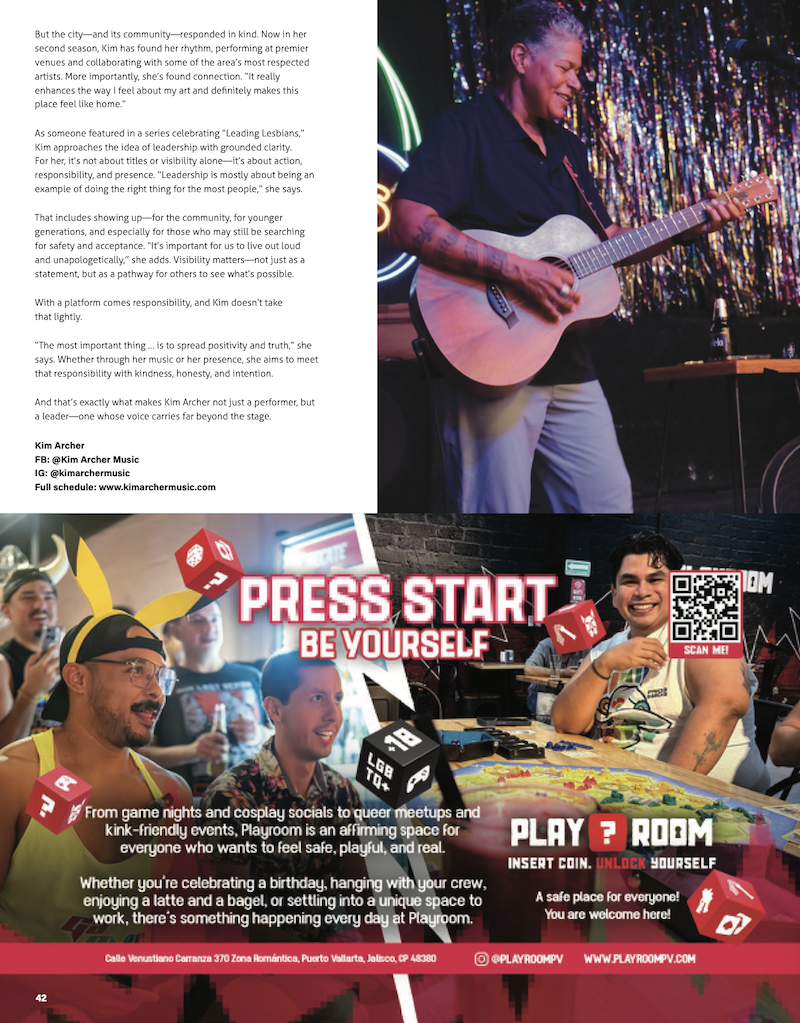
“No wonder this place feels like home,” she reflects. “It’s my ancestral ground.”
Starting over in Vallarta wasn’t without its challenges. Building a presence, finding the right collaborators, and establishing herself in a new scene required patience and persistence. But the city—and its community—responded in kind. Now in her second season, Kim has found her rhythm, performing at premier venues and collaborating with some of the area’s most respected artists. More importantly, she’s found connection. “It really enhances the way I feel about my art and definitely makes this place feel like home.”
As someone featured in a series celebrating “Leading Lesbians,” Kim approaches the idea of leadership with grounded clarity. For her, it’s not about titles or visibility alone—it’s about action, responsibility, and presence. “Leadership is mostly about being an example of doing the right thing for the most people,” she says.
That includes showing up—for the community, for younger generations, and especially for those who may still be searching for safety and acceptance. “It’s important for us to live out loud and unapologetically,” she adds. Visibility matters—not just as a statement, but as a pathway for others to see what’s possible.
With a platform comes responsibility, and Kim doesn’t take that lightly.
“The most important thing … is to spread positivity and truth,” she says. Whether through her music or her presence, she aims to meet that responsibility with kindness, honesty, and intention.
And that’s exactly what makes Kim Archer not just a performer, but a leader—one whose voice carries far beyond the stage.
Kim Archer
FB: @Kim Archer Music
IG: @kimarchermusic
Full schedule: www.kimarchermusic.com
Adriana Batista’s Journey from Activism to Community Care
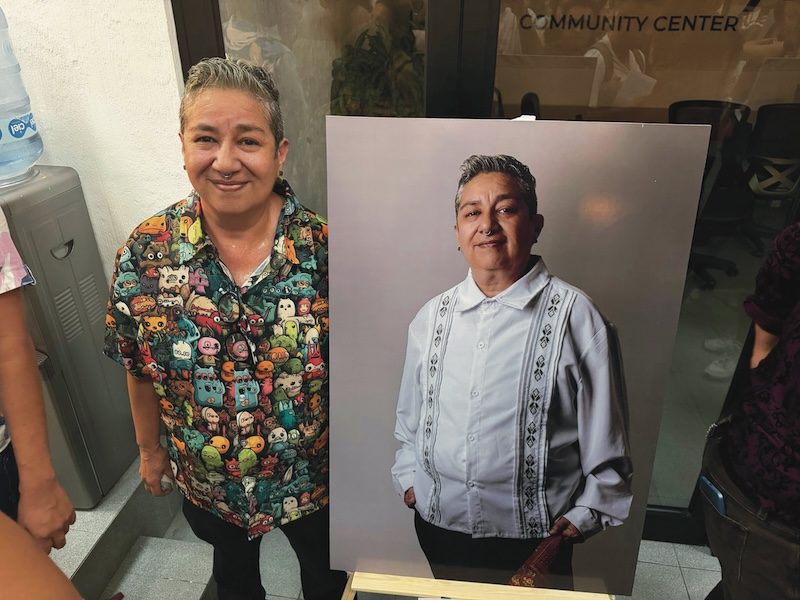
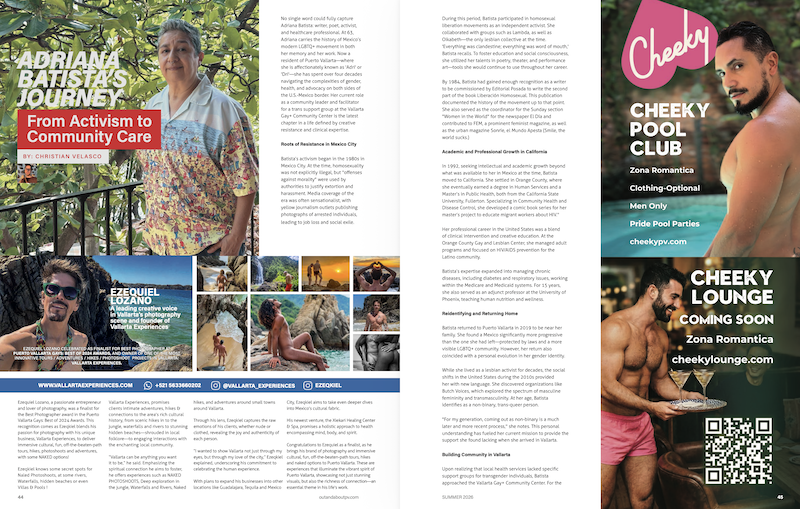
No single word could fully capture Adriana Batista: writer, poet, activist, and healthcare professional. At 63, Adriana carries the history of Mexico’s modern LGBTQ+ movement in both her memory and her work. Now a resident of Puerto Vallarta—where she is affectionately known as ‘Adri’ or ‘Dri’—she has spent over four decades navigating the complexities of gender, health, and advocacy on both sides of the U.S.-Mexico border. Her current role as a community leader and facilitator for a trans support group at the Vallarta Gay+ Community Center is the latest chapter in a life defined by creative resistance and clinical expertise.
Roots of Resistance in Mexico City
Batista’s activism began in the 1980s in Mexico City. At the time, homosexuality was not explicitly illegal, but “offenses against morality” were used by authorities to justify extortion and harassment. Media coverage of the era was often sensationalist, with yellow journalism outlets publishing photographs of arrested individuals, leading to job loss and social exile.
During this period, Batista participated in homosexual liberation movements as an independent activist. She collaborated with groups such as Lambda, as well as Oikabeth—the only lesbian collective at the time. ‘Everything was clandestine; everything was word of mouth,’ Batista recalls. To foster education and social consciousness, she utilized her talents in poetry, theater, and performance art—tools she would continue to use throughout her career.
By 1984, Batista had gained enough recognition as a writer to be commissioned by Editorial Posada to write the second part of the book Liberación Homosexual. This publication documented the history of the movement up to that point. She also served as the coordinator for the Sunday section “Women in the World” for the newspaper El Día and contributed to FEM, a prominent feminist magazine, as well as the urban magazine Sonríe, el Mundo Apesta (Smile, the world sucks.)
Academic and Professional Growth in California
In 1992, seeking intellectual and academic growth beyond what was available to her in Mexico at the time, Batista moved to California. She settled in Orange County, where she eventually earned a degree in Human Services and a Master’s in Public Health, both from the California State University, Fullerton. Specializing in Community Health and Disease Control, she developed a comic book series for her master’s project to educate migrant workers about HIV.”
Her professional career in the United States was a blend of clinical intervention and creative education. At the Orange County Gay and Lesbian Center, she managed adult programs and focused on HIV/AIDS prevention for the Latino community.
Batista’s expertise expanded into managing chronic diseases, including diabetes and respiratory issues, working within the Medicare and Medicaid systems. For 15 years, she also served as an adjunct professor at the University of Phoenix, teaching human nutrition and wellness.
Reidentifying and Returning Home
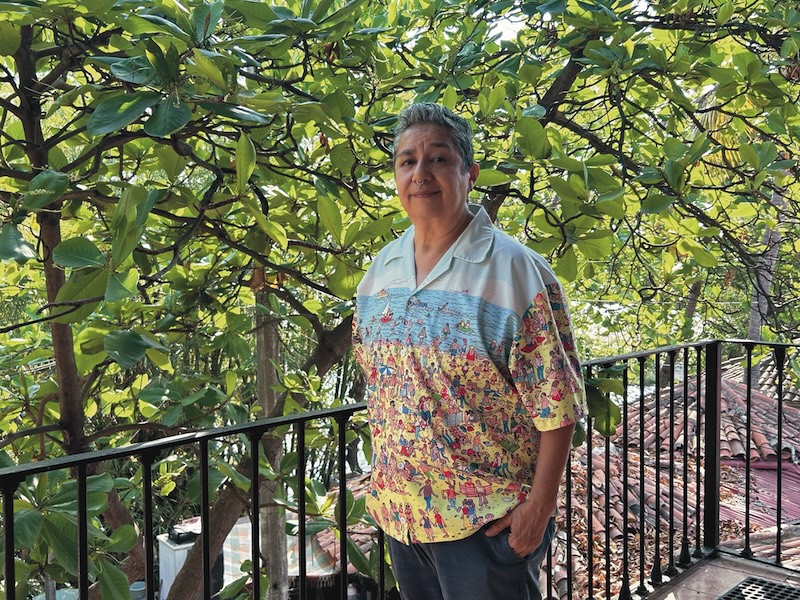
Batista returned to Puerto Vallarta in 2019 to be near her family. She found a Mexico significantly more progressive than the one she had left—protected by laws and a more visible LGBTQ+ community. However, her return also coincided with a personal evolution in her gender identity.
While she lived as a lesbian activist for decades, the social shifts in the United States during the 2010s provided her with new language. She discovered organizations like Butch Voices, which explored the spectrum of masculine femininity and transmasculinity. At her age, Batista identifies as a non-binary, trans-queer person.
“For my generation, coming out as non-binary is a much later and more recent process,” she notes. This personal understanding has fueled her current mission to provide the support she found lacking when she arrived in Vallarta.
Building Community in Vallarta
Upon realizing that local health services lacked specific support groups for transgender individuals, Batista approached the Vallarta Gay+ Community Center. For the past year, she has used her clinical background and lived experience to facilitate a support group in Spanish.
Beyond the support group, Batista founded Vallarta Queer in 2022. This bilingual group focuses on community-building outside of the traditional nightclub scene, hosting brunches and events. She also organizes “Noche de Lenchas” once a month at a 5 de Diciembre bar, an event dedicated to lesbian and sapphic women, featuring local talent and accessible pricing to ensure inclusivity.
Now officially retired from her career in the U.S., Batista remains prolific. Her 2022 poetry anthology, De Ingles Fruncidas, showcases her characteristic use of irony, humor, and urban metaphors. Whether through the clinical management of health or the rhythmic meter of a poem, Adriana Batista continues to work toward a singular goal: ensuring that the presences of her community are not just seen, but understood and celebrated.
Adriana Batista
FB: Adriana Batista (Dri)
IG:@adriana_batista_poeta
Esta publicación también está disponible en: